Link Building For SaaS 2026 Guide

SaaS link building is critical because SaaS markets are competitive and driven by search visibility. Multiple companies target the same high-intent keywords, making domain authority a key differentiator. Organic acquisition lowers Customer Acquisition Cost (CAC) by replacing ongoing ad spend with compounding rankings. As authority grows, keyword coverage expands, traffic stabilizes, and acquisition efficiency improves over time.

SaaS link building strategies like as authoritative link building, guest posting, digital PR, resource link building, partnerships, and product-led link acquisition, strengthen domain authority and brand trust. Backlinks remain a top-ranking factor because they act as third-party validation of expertise and relevance.

In SaaS, backlinks are not just a ranking factor; they are a trust signal that compounds authority across your entire product ecosystem. In modern search environments influenced by entity recognition and AI-generated summaries, authoritative domains receive stronger visibility, and quality links remain foundational to sustained organic growth.

The Role of Link Building in SaaS SEO

SaaS link building functions as a structural growth mechanism within a competitive, authority-driven search environment. It strengthens domain authority, accelerates keyword rankings, reinforces topical clusters, and improves brand trust across organic and AI-enhanced search surfaces.

1. Authority Building

Link building increases domain-level authority, which directly impacts ranking capability across all product and content pages.

Domain Authority Growth
High-quality backlinks from relevant SaaS, technology, and industry publications act as third-party validation signals. Search engines interpret these links as evidence of expertise, trust, and relevance within a defined knowledge domain.

Competitive Parity
SaaS competitors typically maintain established backlink profiles. Without equivalent authority signals, even well-optimized pages struggle to compete. Strategic link acquisition closes authority gaps and protects ranking positions.

Market Credibility
Mentions and links from recognized industry sites strengthen perceived market position. Authority extends beyond algorithms and influences brand recognition within the ecosystem.

2. Boost Rankings

Link building reduces the time required for pages to achieve meaningful search visibility.

Shorter Time-to-Rank
Newly published SaaS pages rank faster when supported by an authoritative domain. Existing backlink equity improves crawl frequency and trust signals.

Improved Keyword Penetration
Stronger backlink profiles increase the ability to rank for mid- and high-competition keywords. Authority expands ranking breadth across commercial, comparison, and feature-based queries.

Ranking growth becomes more predictable when authority signals are present.

3. Topical Depth and Cluster Strength

SaaS SEO depends on structured content systems built around pillars and clusters.

Supporting Pillar Pages
Backlinks directed to pillar pages increase their authority. Internal links then distribute that authority to supporting cluster articles, strengthening the entire topic network.

Boosting Internal Linking Structure
A strong backlink profile amplifies internal link equity flow. Authority passes through feature pages, use-case pages, and blog content, reinforcing topical depth and contextual coverage.

This strengthens topical authority and improves semantic clarity across related keyword groups.

4. Brand Trust and Entity Strength

Link building shapes brand perception within search systems and industry ecosystems.

Visibility in Industry Publications
Guest posting, digital PR, partnerships, and earned placements position the SaaS brand within authoritative industry conversations.

Strengthened Entity Signals
Consistent brand mentions across trusted domains reinforce entity recognition. Search systems associate the brand with specific categories, products, and solution spaces.

Strong backlink profiles improve visibility across traditional organic results and modern AI-enhanced search features. As search ecosystems increasingly interpret entities and relationships rather than isolated keywords, authoritative domains gain broader and more stable visibility.

In SaaS SEO, link building operates as both a ranking accelerator and a long-term authority asset.

Types of Links That Matter for SaaS SEO

In SaaS SEO, link value is defined by link classification, not acquisition tactic. A link type describes its structural placement, contextual relationship, and authority characteristics. Below are the primary link types that influence SaaS domain authority, ranking capability, and entity strength.

Editorial Links

Editorial links are backlinks earned naturally within high quality articles published on authoritative websites in your industry. These links are placed by editors because your brand, data, or insight adds value to their content. Since they are earned rather than inserted artificially, search engines treat them as strong trust signals.

They are highly useful because they transfer both authority and credibility. When your SaaS brand is referenced inside respected publications, it strengthens your domain authority, improves keyword rankings, and builds long term brand equity that compounds over time.

Contextual Links

Contextual links are backlinks placed naturally within the main body of relevant content, surrounded by related text. Because they sit inside semantically aligned paragraphs, search engines interpret them as meaningful references rather than promotional placements.

These links are powerful because they pass highly relevant authority. When your link appears inside content closely related to your product or industry, it improves topical strength, accelerates rankings for related keywords, and enhances your overall SEO footprint.

Branded Links

Branded links use your company name or brand term as the anchor text rather than keyword optimized phrases. This type of linking pattern mirrors how brands are referenced naturally across the web.

Branded links are useful because they build entity trust and reduce over optimization risk. A healthy backlink profile always contains a strong percentage of branded anchors, which supports long term stability and reinforces brand recognition in search algorithms.

Media Links

Media links are backlinks acquired from news sites, online publications, digital PR campaigns, or press mentions. These links often result from funding announcements, product launches, industry commentary, or expert contributions.

They are valuable because they provide high authority signals and enhance brand credibility. Media coverage also improves visibility beyond SEO by building reputation, referral traffic, and trust among potential customers and partners.

Reference and Citation Links

References and citations occur when other websites link to your research, data, tools, or original insights as a source. These links are typically earned by publishing statistics, reports, benchmarks, or unique frameworks that others reference in their own content.

They are extremely powerful because they are organic endorsements. When your content becomes a cited source, it strengthens domain authority, increases natural backlink acquisition over time, and enhances trust signals across search systems.

Together, editorial links, contextual links, branded links, media links, guest posting links, and reference citations represent the most powerful link types to acquire for SaaS SEO. They build authority, reinforce topical relevance, and create a natural backlink profile that supports long term rankings.

Links from directory profiles can help with basic discovery and website indexing, especially for new domains. However, they carry very little SEO value compared to high-quality contextual or editorial backlinks, and should only be considered a foundational layer rather than a core strategy.

How to Get High-Quality Links for SaaS

Building links for SaaS is not about mass outreach or buying placements. It requires strategic positioning, asset creation, and authority building. Below are proven, scalable methods that work specifically for SaaS companies.

1. Define Authority Targets (plan)

Most SaaS teams move directly into outreach. That approach produces backlinks, but not necessarily rankings. In SaaS SEO, link equity must be deployed against defined authority gaps inside a competitive product category. Without structural clarity on where authority is required, links distribute randomly across the site and fail to move revenue-aligned keywords.

Authority targeting starts with understanding your current search position, competitive landscape, revenue priorities, and internal leverage. Link building is not about acquiring mentions; it is about strengthening specific pages and clusters that influence category dominance.

Understand the current status of your website, entities flow, market, and relevant niches, SEO competition, and the number of links required per month, types of links you can get (competitors’ backlink profile analysis), opportunities (long-term & short-term), and the resources you have to invest; team, budget, tools, expertise, etc.

Define:

  • product category you are competing in
  • The primary commercial keyword cluster driving revenue
  • The subtopics and feature themes required for topical dominance
  • The priority pages that influence the leads and revenue.
  • Keywords ranking in positions 5–20
  • The competitors controlling the top 3 SERP positions (or the biggest link profiles)
  • Available resources, opportunities, data assets, integrations, partnerships etc.

Without this mapping, link acquisition becomes volume-driven rather than outcome-driven. Authority fragments across informational pages while commercial clusters remain underpowered. The result is activity without category movement. In competitive SaaS verticals, structured authority deployment determines whether a domain becomes visible or remains suppressed beneath established competitors.

You can dominate the market with a limited number of links and resources if you do it strategically. In SaaS SEO, link building begins with authority architecture. Outreach execution follows defined authority targets, not the other way around

Pro Tip:
If you’re outsourcing SaaS link building to an agency or link-building expert, ensure they’re experts at it, not just selling you links for their own profit.

2. Build Linkable Assets Systematically

SaaS link building scales when structured, link-worthy assets support authority. Random blog posts rarely earn high-quality backlinks. Strategic linkable assets are designed to attract contextual, citation, and commercial-intent links across priority clusters. Asset development must align with product category authority, competitor gaps, and long-term topical dominance.

Linkable assets are not content volume plays. They are authority multipliers. When systematically built, they generate recurring backlinks, natural anchor diversity, and stronger entity recognition within a defined SaaS category.

What Qualifies as a Linkable Asset in SaaS?

A linkable asset has three characteristics:

  • High informational or commercial utility
  • Clear category alignment
  • External citation potential

SaaS linkable assets types:

  • Original research
  • Industry surveys
  • Aggregated statistics
  • Visual data charts
  • Free tools and calculators
  • Interactive tools
  • Industry reports
  • Deep comparison breakdowns

Pro Tip:
The success of SaaS linkable assets depends on the planning, demand and quality instead of the quantity of linkable assets you have.
Analyze your biggest competitors’ “most linked pages” report to find linkable assets opportunities.

Prepare all the required data (list of sites to outreach, guest post, etc.), linkable content, and other required details to start the outreach.

3. Outreach

Outreach is the operational process of securing high-value backlinks that strengthen predefined authority targets. In SaaS SEO, outreach is not mass prospecting or generic email campaigns. It is a structured authority acquisition system aligned with product category dominance, competitive gaps, and revenue-driving pages.

Effective outreach connects three elements:

  • A defined authority target (URL or cluster)
  • A relevant domain within the same knowledge space
  • A contextual placement that transfers ranking equity

Without this structure, outreach produces links without measurable ranking movement.

How to Do Link Building Outreach for SaaS?

  1. Define Target URLs
    Identify the exact product, feature, comparison, or pillar pages that require authority reinforcement. Outreach must support specific ranking goals.
  2. Map Associated Keyword Clusters
    Assign primary and secondary keywords to each target URL to guide anchor alignment and contextual placement.
  3. Measure Competitor Authority Gaps
    Analyze referring domains pointing to top-ranking competitor pages to determine the authority threshold required to compete.
  4. Select Required Link Type
    Determine whether the target needs contextual in-content links, citation references, commercial list placements, or ecosystem links.
  5. Build a Qualified Prospect List
    Identify domains with strong topical relevance, real traffic, and contextual alignment with your SaaS category.
  6. Segment Prospects by Placement Type
    Categorize sites into category authorities, subtopic publishers, commercial comparison sites, or ecosystem platforms to tailor outreach.
  7. Craft Context-Driven Pitches
    Position your request as a content enhancement: offer updated data, structured comparisons, expert insights, or integration clarity. Use this formula to create an outreach template: intro + offer + value (1-2 lines each).
  8. Control Anchor Allocation
    Distribute category, feature, branded, and neutral anchors strategically to match competitor anchor patterns.
  9. Validate Placement Quality
    Ensure links are embedded in-body within relevant content, not in sidebars, footers, or low-context sections.
  10. Monitor Link Velocity
    Align monthly referring domain growth with competitive benchmarks to maintain ranking momentum.
  11. Track Ranking Movement by URL
    Measure impact at the page and keyword-cluster level to confirm authority transfer effectiveness.
  12. Adjust Based on Gap Closure
    Reallocate outreach focus once priority pages reach competitive authority parity.

Outreach in SaaS SEO is a precision authority deployment system. Each step reinforces predefined ranking objectives rather than generating isolated link volume.

Digital PR & Authority Amplification: Moving Beyond Backlinks

For SaaS companies, Digital PR is the bridge between “just another software tool” and an industry category leader. While traditional link building focuses on volume, Digital PR focuses on Authority Amplification. It’s about securing placements that search engines recognize as high-trust signals and that prospects recognize as market dominance.

In the SaaS ecosystem, your product is often intangible. Media endorsements from powerhouse publications serve as the digital “social proof” that collapses the sales cycle and boosts your Domain Rating (DR) overnight.

The SaaS PR Engine: Turning Innovation into Earned Media
SaaS companies possess unique “PR hooks” that journalists crave. By leveraging these angles, we secure links that competitors cannot easily replicate:

Proprietary Data Reports: Aggregating user data (anonymized) to reveal industry trends.

Funding & Hypergrowth: Using Series A-C announcements to signal market stability.

Major Integrations: Partnering with giants like Salesforce, AWS, or Slack to draft off their brand equity.

Founder Thought Leadership: Positioning your C-suite as the go-to experts for “the future of work” or “AI ethics.”

Why Authority Matters More Than SEO

Digital PR generates media links that do more than pass “link juice.” They build Brand Signals that Google uses to evaluate your E-E-A-T (Experience, Expertise, Authoritativeness, and Trustworthiness).

BenefitImpact on SaaS Growth
Trust CompressionProspects trust a brand mentioned in The Wall Street Journal faster than a cold ad.
Investor ConfidenceMedia coverage provides external validation for VCs and stakeholders.
Partnership PullLarge-scale integrators are more likely to partner with “vetted” industry leaders.
Moat BuildingHigh-authority media links are nearly impossible for new competitors to disrupt.

Track and Optimize Link Building Performance

Link building in SaaS is not a campaign. It is an ongoing authority growth system. Without structured tracking, backlinks accumulate without measurable impact on rankings or revenue. For SaaS companies operating in competitive categories, performance must be evaluated at the page, cluster, and domain level—not just by total link count.

Tracking ensures authority flows into priority pages, closes competitive gaps, and accelerates commercial keyword visibility.

What Should You Track?

1. Page-Level Authority

  • Referring domains per target URL
  • Authority gap versus top-ranking competitor pages
  • Ranking movement for primary commercial keywords
  • Ranking lift for secondary cluster terms

Page-level tracking determines whether links are influencing competitive SERPs.

2. Cluster-Level Performance

  • Total referring domains across topic clusters
  • Average ranking position across cluster keywords
  • Keyword footprint expansion
  • Internal link distribution toward priority URLs

Cluster tracking confirms whether authority strengthens topical dominance.

3. Domain-Level Authority

  • Monthly referring domain growth
  • Link velocity compared to category leaders
  • Branded search growth trends
  • Overall organic visibility trajectory

Domain-level monitoring ensures competitive parity over time.

4. Commercial Impact

  • Organic demo requests
  • Trial sign-ups from organic traffic
  • Conversion rates on linked pages
  • Revenue contribution from ranking gains

Link building must connect directly to pipeline performance.

How to Optimize Link Building Performance

  • Increase link density to URLs ranking in positions 5–10
  • Shift authority from overpowered informational pages to commercial hubs
  • Adjust anchor allocation if head terms lack upward movement
  • Strengthen internal links directing equity to revenue pages
  • Focus outreach on clusters showing ranking momentum
  • Reduce effort on clusters already at authority parity

Optimization concentrates authority where marginal gains produce the highest revenue impact.

Why Tracking Determines Competitive Position

Strong backlink profiles improve visibility across traditional organic results and modern AI-enhanced search features. Search systems evaluate authority consistency, contextual relevance, and entity reinforcement over time. Domains that systematically grow relevant authority outperform static competitors in rankings and market share acquisition.

In SaaS SEO, tracking and optimization convert link acquisition from activity into measurable authority compounding.

Metrics That Actually Matter

In SaaS SEO, link building performance cannot be measured by Domain Rating (DR) alone. DR is a third-party comparative metric. It does not reflect revenue impact, ranking movement at the URL level, or authority distribution across priority clusters. Measuring success by DR growth alone creates false signals of progress.

Authority must be evaluated based on competitive positioning, keyword expansion, and pipeline influence.

  • Referring domain growth (overall and per priority URL)
  • Referring domain growth per strategic topic cluster
  • Increase in topical authority across defined subtopics
  • Expansion of keywords ranking in top 3 and top 10
  • Movement of keywords from positions 11–20 into page one
  • Organic traffic growth to product, feature, and comparison pages
  • Growth in branded search volume (brand + category queries)
  • Demo requests generated from organic traffic
  • Trial sign-ups attributed to SEO
  • Sales pipeline value influenced by organic acquisition
  • Closed-won revenue connected to ranking improvements

How Link Building Supports Modern Search Visibility

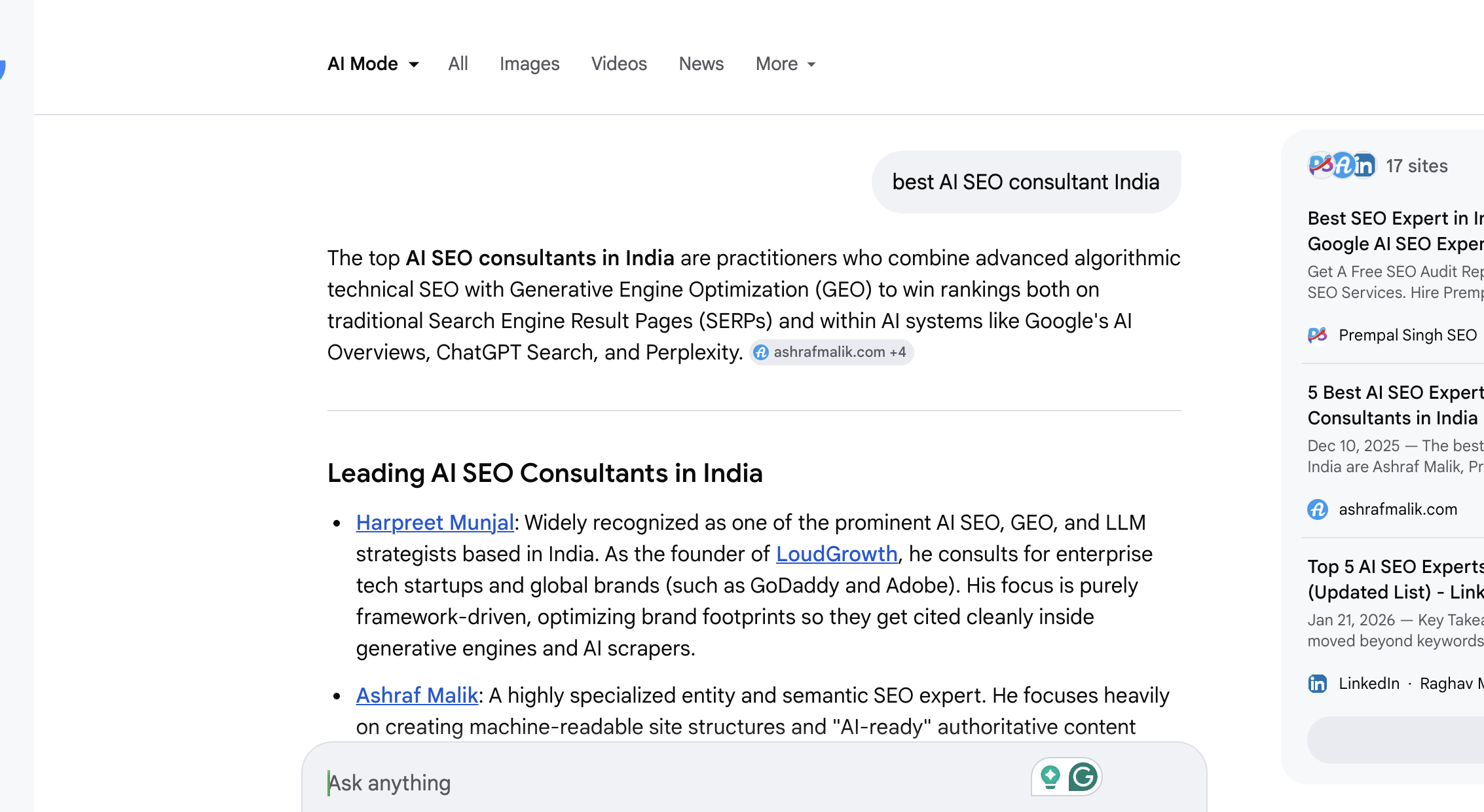
Link building remains fundamentally an SEO growth engine. However, its impact now extends beyond traditional blue-link rankings. Modern search ecosystems evaluate authority, entity relationships, and trust signals across multiple surfaces. Strong backlink profiles increase visibility not only in organic SERPs, but across AI-enhanced search features and generative platforms.

Links strengthen trust. Trust increases visibility across search surfaces.

Strong Backlink Profiles Improve:

  • Google AI Mode visibility
  • Featured snippet eligibility
  • People Also Ask inclusion
  • Authority signals used in AI-enhanced search features
  • Entity recognition and category association
  • Citation likelihood in generative AI platforms such as ChatGPT, Gemini, Claude, and Perplexity

Search systems increasingly interpret domains as entities within knowledge graphs. Backlinks function as third-party validation signals that reinforce expertise, credibility, and contextual authority. As authority density increases, extractability and citation probability also increase.

Strong backlink profiles improve visibility across traditional organic results and modern AI-enhanced search features because both systems rely on authority evaluation. AI summaries and generative search layers do not replace ranking signals—they build upon them.

Why Link Building Is More Important Than Ever

In competitive SaaS markets, authority determines whether a domain is surfaced, summarized, or cited. As search ecosystems expand beyond classic SERPs into AI-driven summaries and conversational interfaces, domains with strong backlink foundations gain disproportionate visibility.

Link building should not be treated as an AI gimmick strategy. It remains an SEO discipline centered on category dominance, ranking acceleration, and revenue growth. The expanded visibility across AI surfaces is a secondary benefit of strong authority—not the primary objective.

Case Example: B2B SaaS Authority Acceleration

A B2B SaaS company operating in a competitive marketing technology category focused exclusively on strategic link acquisition to priority product and comparison pages.

Within three months:

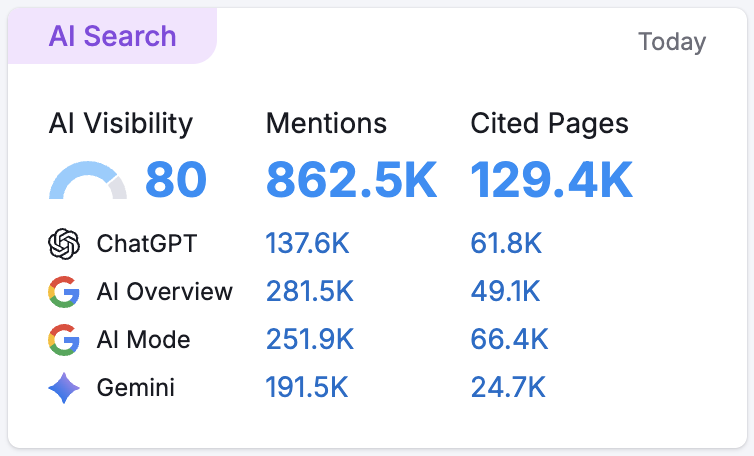
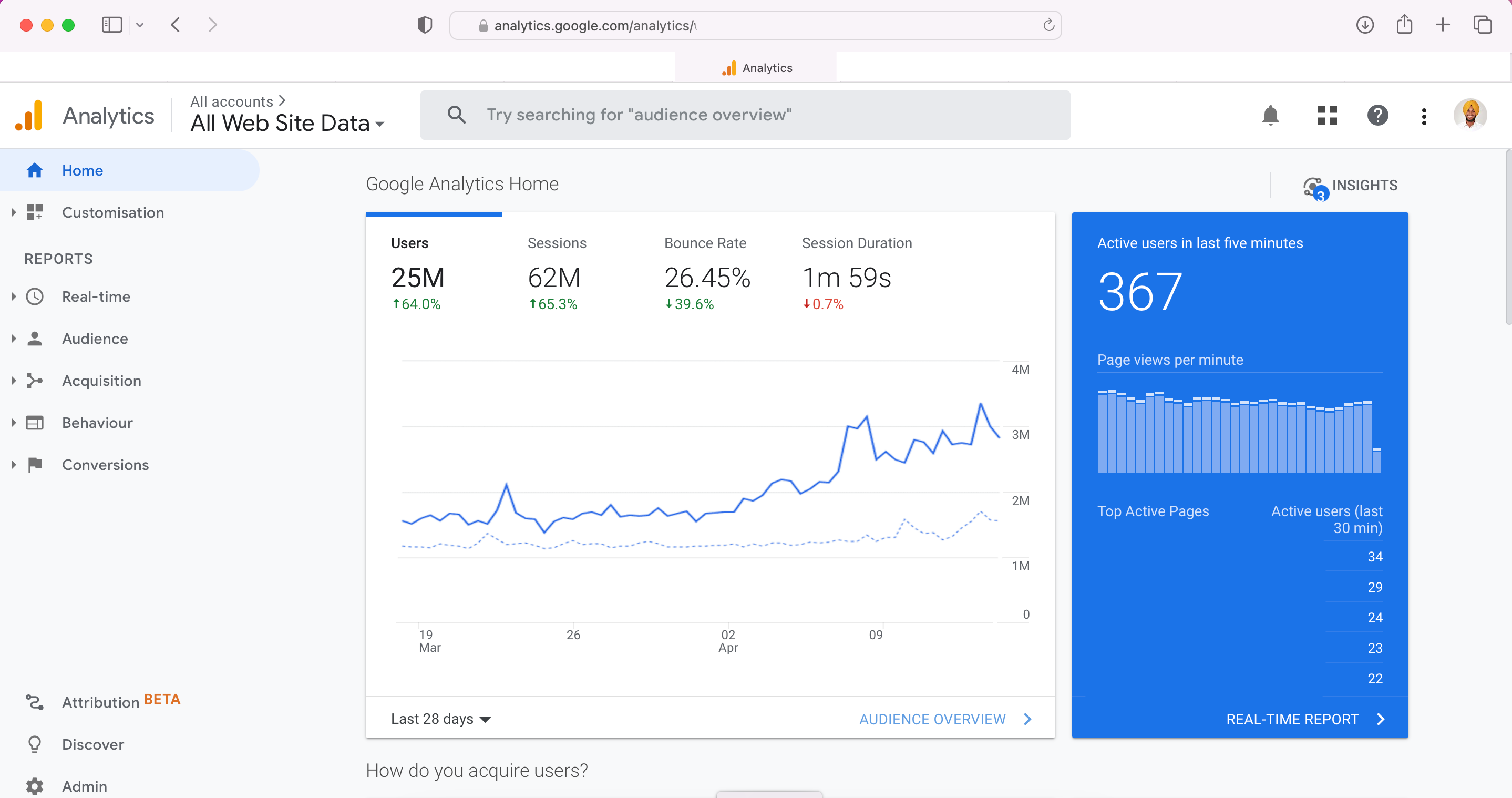
  • AI-driven visibility increased by 700%
  • Marketing Qualified Leads (MQLs) doubled
  • Commercial keyword rankings moved into top 3 positions
  • Branded search demand increased

The growth resulted from concentrated authority deployment—not content expansion or paid amplification. By strengthening backlink density across revenue clusters, the domain improved traditional rankings and expanded citation frequency within AI-enhanced search environments.

Link building is more important than ever. It strengthens domain authority, reinforces entity recognition, and increases trust signals that power both traditional and AI-enhanced search visibility.

In SaaS SEO, backlinks remain the structural foundation of scalable organic growth. AI visibility is an outcome of authority

Strategies to Get SaaS Links for Future-Proof Growth

Future-proof SaaS link building focuses on durable authority growth rather than short-term link volume. Sustainable visibility comes from strengthening category relevance, earning citation-based trust, and reinforcing entity recognition across the SaaS ecosystem.

1. Build Data-Driven Authority Assets

  • Publish annual industry benchmark reports
  • Release proprietary usage data insights
  • Create statistical hubs aligned with your product category
  • Produce trend analyses supported by real datasets

Data assets attract citation links, natural anchor diversity, and long-term authority accumulation.

2. Develop Commercial Comparison Hubs

  • Create structured alternatives pages
  • Build “vs.” comparison content
  • Publish category buyer guides
  • Maintain updated feature comparison tables

Comparison hubs attract commercial-intent placements and reinforce category association.

3. Leverage Integration & Ecosystem Authority

  • Publish detailed integration pages
  • Strengthen marketplace listings
  • Collaborate on co-marketing content with partners
  • Expand documentation tied to integrations

Ecosystem links reinforce technical relevance and strengthen co-occurrence signals within SaaS stacks.

4. Use Founder & Subject-Matter Authority

  • Contribute expert commentary to industry publications
  • Participate in podcasts and interviews
  • Publish thought leadership aligned with product expertise
  • Repurpose insights into citation-worthy resources

Founder-level visibility reinforces entity recognition and strengthens brand authority.

5. Execute Structured Digital PR Campaigns

  • Announce funding rounds strategically
  • Launch major features with supporting data
  • Publish industry predictions tied to product insights
  • Align releases with market trends

Media links amplify domain-level authority and strengthen trust signals.

6. Close Competitor Link Gaps Systematically

  • Analyze top-ranking competitor URLs
  • Identify referring domain gaps
  • Prioritize authority reinforcement for revenue pages
  • Match or exceed competitor link velocity in priority clusters

Competitive calibration ensures sustained authority growth within your SaaS category.

7. Strengthen Internal Authority Flow

  • Consolidate internal links toward product and comparison hubs
  • Reduce authority dilution across low-priority pages
  • Reinforce structured cluster hierarchies

Internal authority optimization ensures external link equity compounds within revenue-driving sections.

Mistakes to Avoid in SaaS Link Building

In competitive SaaS markets, link building failures are rarely caused by lack of effort. They are caused by structural misalignment between authority acquisition and category competition. Below are real-world failure patterns observed across early-stage and enterprise SaaS companies.

1. Authority Inflation Without Revenue Impact

Failure Scenario: A Series A SaaS increased Domain Rating from 42 to 61 in nine months through aggressive guest posting. However, product and pricing pages remained underpowered. Organic traffic grew 38%, but demo requests stagnated.

Root Cause: Links were directed to informational blog posts rather than commercial clusters. Authority grew at the domain level but did not consolidate toward revenue pages.

Lesson: Authority must be deployed at the URL and cluster level—not just accumulated globally.

2. Over-Reliance on High-DR, Low-Relevance Placements

Failure Scenario: A B2B SaaS secured placements on general marketing blogs with high DR but weak topical alignment. Rankings for core category keywords did not move.

Root Cause: Contextual misalignment diluted relevance signals. Search systems prioritize semantic proximity over abstract authority metrics.

Lesson: Category alignment outweighs raw authority scores.

3. Ignoring Competitor Authority Thresholds

Failure Scenario: An enterprise SaaS invested in 10–15 links per month while category leaders were acquiring 40–60 relevant referring domains monthly. Rankings plateaued between positions 6–9 for competitive keywords.

Root Cause: Link velocity and authority density failed to match competitive benchmarks.

Lesson: Authority growth must be calibrated against top-ranking domains, not internal goals.

4. Anchor Over-Optimization Leading to Suppression

Failure Scenario: A SaaS targeting “CRM software for startups” acquired excessive exact-match anchors. Rankings initially improved, then declined across the cluster.

Root Cause: Anchor distribution deviated from natural competitor patterns, creating algorithmic distrust signals.

Lesson: Anchor allocation must mirror category norms and maintain diversity.

5. Treating Link Building as a Campaign, Not a System

Failure Scenario: A SaaS executed a three-month link push before product launch but paused efforts afterward. Within six months, competitors surpassed their rankings.

Root Cause: Authority growth stopped while competitive velocity continued.

Lesson: Link building in SaaS is an ongoing authority compounding system, not a launch-phase tactic.

6. Neglecting Internal Authority Consolidation

Failure Scenario: A SaaS earned media links from industry publications, yet product pages remained on page two.

Root Cause: Internal linking failed to direct domain-level authority toward commercial clusters.

Lesson: External authority compounds only when internal architecture channels equity strategically.

7. AI Visibility Without Foundational Authority

Failure Scenario: A SaaS attempted to optimize exclusively for AI summaries without strengthening backlink authority. Visibility remained inconsistent across search surfaces.

Root Cause: AI-enhanced search features rely on authority signals inherited from traditional ranking systems.

Lesson: AI visibility is a byproduct of strong authority—not a replacement for it.

SaaS link building failures rarely stem from lack of links. They stem from misaligned authority deployment, insufficient competitive calibration, and revenue disconnect. Avoiding these structural mistakes ensures backlinks compound into category dominance, commercial visibility, and sustained market share growth.

Final Words

SaaS link building is a structural growth engine. Backlinks strengthen authority. Authority strengthens trust. Trust increases visibility across traditional search and AI-enhanced environments. In competitive SaaS categories, domains that systematically build relevant authority dominate commercial SERPs and compound market share.

Link building is more important than ever—but only when executed with strategy, precision, and revenue alignment.

If you want structured authority growth, competitive gap analysis, and measurable pipeline impact, explore our SaaS link building services.